
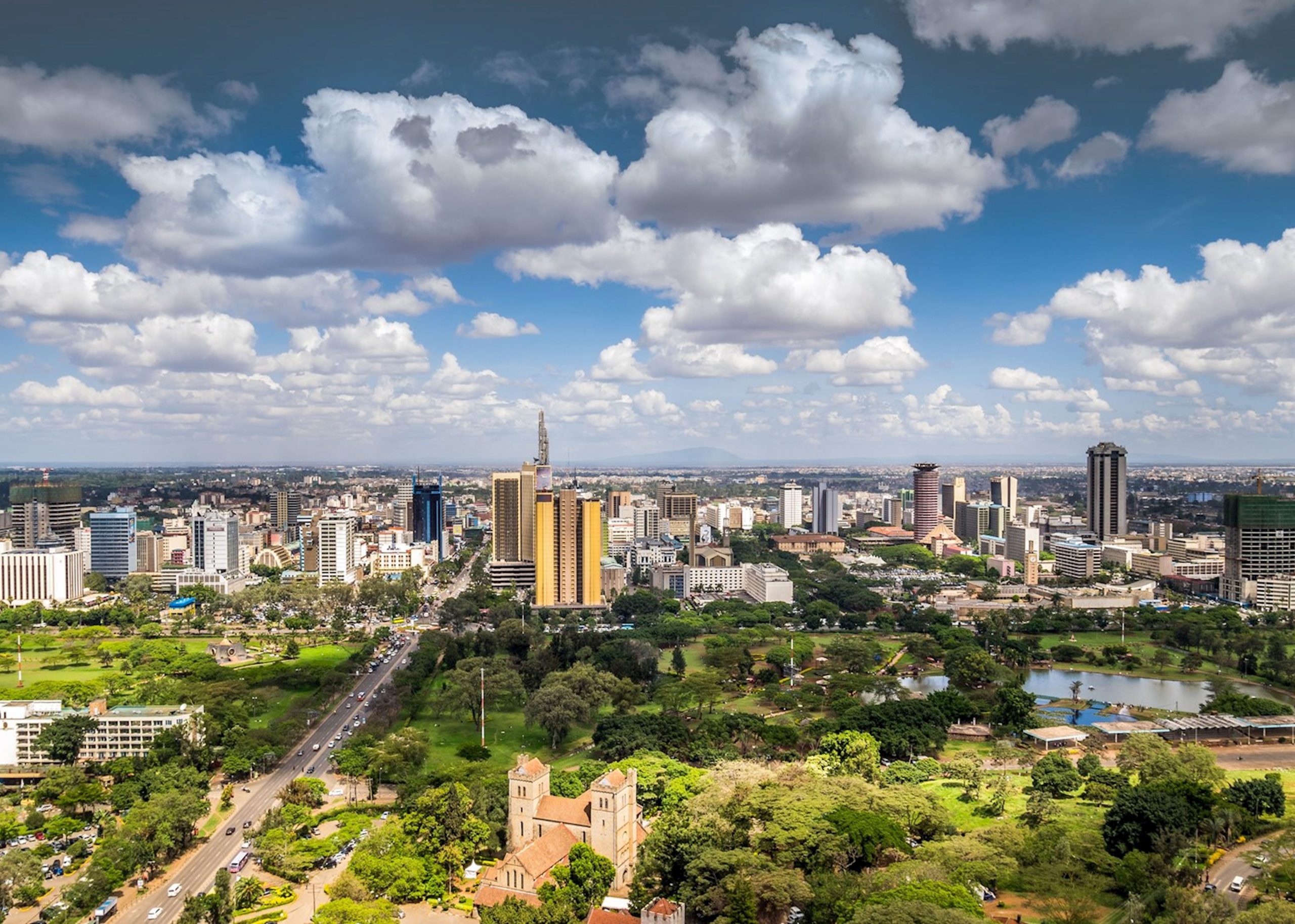

The urban trajectory of Nairobi from a transient railway supply depot in 1899 to its current standing as a “Beta World City” represents one of the most significant transformations in African geography. Situated at a strategic highland elevation between 1,660 and 1,795 meters above sea level, the city serves as the primary financial, diplomatic, and technological epicenter of East Africa. As of early 2026, Nairobi continues to undergo a period of rapid vertical expansion and infrastructure modernization, driven by massive public-private partnerships and a burgeoning technology sector often referred to as the “Silicon Savannah”. This report provides an exhaustive analysis of Nairobi’s historical foundations, geographical context, economic drivers, and the complex sociopolitical challenges that define its contemporary identity.
- Historical Foundations and Colonial Urbanism
- Geographical Context and Environmental Framework
- The Silicon Savannah: Technology and Innovation Ecosystem
- Infrastructure Expansion and National Mobility
- Environmental Governance and the Circular Economy
- Sociopolitical Landscape and Youth Mobilization
- Cultural Identity and Urban Neighborhoods
- Tourism and the Global Wildlife Capital
- Synthesis and Conclusion
Historical Foundations and Colonial Urbanism
The genesis of Nairobi was not the result of organic settlement patterns but was dictated by the logistical requirements of the British colonial administration. In 1899, the site was selected as a strategic camp for engineers constructing the Uganda Railway, which sought to connect the coastal port of Mombasa with Lake Victoria. Known by the Maasai community as Enkare Nyirobi, meaning “the place of cool waters,” the location was chosen for its reliable water supply, temperate climate, and flat terrain suitable for a railway depot. By 1900, the settlement had already begun to host a significant Indian community and a growing commercial bazaar, reflecting the city’s early multi-ethnic roots.
The suitability of the site was initially contentious, as the swampy conditions led to severe plague outbreaks in 1901 and 1904. Despite these health crises and discussions regarding the construction of a new capital elsewhere, Nairobi’s prominence was assured by its central role in the railway’s operations, and it was officially designated the capital of the territory in 1907, replacing Mombasa. The colonial years were marked by a rigid architecture of racial inequality and systemic segregation. Legislation restricted the ability of native Africans to own property and established a “pass system” to control their movements within the city. Residential zoning was explicitly segregated, with Europeans occupying high-altitude green suburbs while Indian and African residents were confined to specific neighborhoods and denied access to many hotels, restaurants, and medical facilities.
These colonial policies fostered a climate of paternalism and exclusion that eventually triggered widespread unrest. The tensions culminated in the Mau Mau movement of the 1950s, a nationalist uprising primarily led by the Kikuyu people against British colonial rule. The British response included mass arrests and operations such as Operation “Anvil” in 1954, which targeted thousands of suspected Mau Mau supporters within Nairobi. Following the execution of movement leader Dedan Kimathi in a Nairobi prison in 1957, the pressure for independence became insurmountable. Kenya gained independence in 1963, with Nairobi retained as the capital, ushering in an era of breakneck population growth that saw the city’s residents increase from 340,000 to over 800,000 by the 1980s.
| Historical Period | Key Developments and Milestones | Impact on Urban Identity |
| 1899–1905 | Foundation as a railway camp for the Uganda Railway | Selection of site based on logistics and climate |
| 1907 | Elevation to the capital of British East Africa | Shift of administrative power from the coast to the highlands |
| 1952–1960 | Mau Mau uprising and Operation “Anvil” | Center of the nationalist struggle for independence |
| 1963 | Declaration of Independence from Great Britain | Transition to a national capital and rapid urbanization |
| 1990s–Present | Global integration and vertical growth | Transformation into a regional financial and tech hub |
Geographical Context and Environmental Framework
Nairobi’s physical geography is characterized by its location at 1°16’S and 36°48’E, approximately 140 kilometers south of the equator. The city sits on the eastern edge of the Great Rift Valley, a position that renders the area susceptible to minor earthquakes and tremors. The landscape is defined by its dramatic elevation changes, ranging from the Athi Plains to the east to the Ngong Hills in the west, which form the city’s most prominent western skyline. Other major regional features include Mount Kenya to the north and Mount Kilimanjaro to the southeast, both visible from the city on clear days.
The city’s climate is classified as subtropical highland (Cwb) under the Köppen system, providing a temperate environment that contrasts with the tropical heat of the lowlands. The presence of two distinct rainy seasons—the long rains from March to May and the short rains from October to December—is critical for the region’s agricultural productivity, particularly for the tea and coffee industries that have historically anchored the city’s economy. Temperatures remain relatively mild throughout the year, though evenings can drop to as low as 9 °C during the cool season in June and July.
| Climate Metric | Annual Average / Specific Season | Observed Values |
| Annual Mean Temperature | Warmest period (Feb–April) | 19 °C (66.6 °F) |
| Annual Mean Temperature | Coolest period (July–Aug) | 16 °C (60.8 °F) |
| Max Daytime Temperature | September to April | 24 °C (75 °F) |
| Min Nighttime Temperature | May to August | 11 °C (51.8 °F) |
| Elevation | High-altitude basin | 1,660 – 1,795 meters |
| Total Metropolitan Area | Urban and suburban footprint | 684 – 696 square kilometers |
Environmental preservation in Nairobi is marked by a legacy of civil activism, most notably the efforts of Nobel Peace Prize laureate Wangari Maathai to protect the Karura Forest from infrastructure development. Today, Nairobi is uniquely distinguished as the only capital city in the world containing a full national park within its borders. The Nairobi National Park, established in 1946, protects open savannah and riverine woodland where lions, rhinos, and giraffes roam in view of the city’s skyscrapers. Other significant green spaces include the Nairobi Arboretum, which serves as a living archive of exotic and indigenous trees, and Uhuru Park, which functions as a vital social and political gathering space in the heart of the Central Business District.
The Silicon Savannah: Technology and Innovation Ecosystem
The emergence of Nairobi as “Silicon Savannah” reflects a transformative shift toward a digital-first economy. This technological ecosystem is anchored by a mobile-first philosophy, pioneered by the 2007 launch of M-Pesa, which revolutionized financial inclusion by allowing users to conduct transactions without traditional bank accounts. By 2024, Nairobi had established itself as the undisputed tech capital of Africa, characterized by high mobile penetration (over 90%) and a concentration of innovation hubs like iHub and Nailab. In 2023 alone, the city’s tech sector recorded a milestone $700 million in venture capital investment, a 30% increase from previous years.
Government support, articulated through the “Vision 2030” framework and the 2022 Startup Act, has provided the policy backing necessary for this growth, offering tax incentives and regulatory clarity for entrepreneurs. This environment has attracted global technology giants; both Google and Microsoft have established major innovation and AI research centers in the city, focusing on African-centric solutions in agriculture and linguistics. The rollout of 5G networks by local telecommunications leader Safaricom is further accelerating the adoption of Deep Tech, including Internet of Things (IoT) applications for smart city management and industrial operations.
A cornerstone of this digital ambition is Konza Technopolis, a planned “smart city” located approximately 60 kilometers southeast of Nairobi. Envisioned as a primary pillar of the Knowledge Economy, Konza is progressing through phases focused on research parks, data centers, and green energy. The National Data Centre at Konza, a Tier III facility, currently hosts over 28 private and public sector clients, providing the localized server capacity necessary for data sovereignty and reduced latency in digital services. As of March 2026, the ACTS Research Hub at Konza is nearing completion, signifying a move to integrate policy research with industrial application within the technopolis.
| Innovation Driver | Function and Significance | Key Stakeholders / Entities |
| M-Pesa | Foundation for fintech and mobile payments | Safaricom, 40M+ users |
| iHub / Nailab | Incubation and collaborative entrepreneurial hubs | 500+ startups incubated |
| Konza Technopolis | Smart city and Tier III National Data Centre | KoTDA, Vision 2030 Secretariat |
| Google / Microsoft | Global R&D and AI Research Centers | International tech partners |
| Kenya-AIST | Advanced STEM education and research | South Korean and Kenyan governments |
Infrastructure Expansion and National Mobility
Nairobi’s infrastructure is currently undergoing a massive overhaul to address the constraints of its rapid population growth, which is expected to reach 7 million by 2035. Central to this effort is the Jomo Kenyatta International Airport (JKIA) expansion project. By 2025, JKIA handled 8.93 million passengers annually, exceeding its design capacity of 7.5 million and resulting in severe operational bottlenecks during peak hours. In March 2026, President William Ruto signed the National Infrastructure Fund (NIF) Bill into law, designating the Sh20 billion JKIA expansion as its first flagship project. The NIF represents a shift in financing strategy, leveraging domestic capital from pension funds and the proceeds of the Kenya Pipeline IPO to reduce reliance on foreign-denominated debt.
The JKIA project includes short-term upgrades to the existing runway and the construction of rapid exit taxiways to increase airfield efficiency, alongside long-term plans for a new passenger terminal capable of handling 10 million additional passengers. Simultaneously, the city is addressing its crippling road traffic congestion through the $1.7 billion Kenya Urban Mobility Improvement Project (KUMIP), supported by a $500 million World Bank loan. This initiative targets the 57-kilometer Nairobi Central-Thika commuter rail corridor, aiming to modernize the rail spine with Diesel-Electric Multiple Unit (DEMU) trainsets and automated fare collection systems to provide an affordable alternative to the heavily congested Thika Superhighway.
The Standard Gauge Railway (SGR), connecting Nairobi to Mombasa, continues to serve as a vital logistics artery. In 2025, the SGR recorded record passenger traffic of 2.73 million and cargo volumes of 7.48 million tonnes, demonstrating sustained demand despite a 50% increase in passenger fares. The ongoing extension of the SGR from Naivasha toward Kisumu and Malaba is expected to further integrate the regional economy, positioning Nairobi as the central node in the East African transport corridor.
| Infrastructure Sector | 2025-2026 Project / Metric | Financial or Operational Scale |
| Aviation (JKIA) | NIF Flagship Expansion | Sh20 Billion (Initial Phase) |
| Commuter Rail | Nairobi-Thika Corridor (KUMIP) | $1.7 Billion Total Project Cost |
| SGR Passenger | Annual Traffic Growth | 2.73 Million Passengers |
| SGR Freight | Annual Cargo Throughput | 7.48 Million Tonnes |
| Roadways | Nairobi Expressway and Highways | 2,500 km priority highway dualling |
Environmental Governance and the Circular Economy
Sustainability in Nairobi is being redefined through aggressive policies targeting air quality and waste management. Historically, the city has faced a public health crisis due to severe air pollution, with average fine particulate matter (PM2.5) levels in 2023 measuring four times higher than World Health Organization recommendations. In late 2025, the county government launched the Nairobi City County Air Quality Action Plan (2025-2029) and a first-of-its-kind public data portal. Supported by the “Breathe Cities” initiative, the network utilizes 50 hyper-local sensors placed in schools and health facilities to provide real-time, evidence-based data for urban planning.
A significant shift in the city’s urban metabolism is also underway with the decommissioning of the Dandora dumpsite. Established in 1977 as a temporary solution, the 30-acre site became an environmental tragedy, with toxic smoke and sewage runoff contaminating the Nairobi River and surrounding low-income estates. In February 2026, the national and county governments announced a joint initiative to relocate waste disposal to a new landfill in Ruai and construct a modern Waste-to-Energy plant. This facility is designed to generate 45 to 70 megawatts of electricity for the national grid while producing organic fertilizer.
A key component of this transition is the formalization of waste pickers. The government has committed to recognizing the thousands of informal workers at sites like Dandora, integrating them into cooperative movements that guarantee market-aligned prices for recyclables and provide personal protective equipment. This policy, rooted in the Sustainable Waste Management Act of 2022, seeks to professionalize the recycling chain and increase daily earnings for workers by an estimated 35 to 50 percent.
Sociopolitical Landscape and Youth Mobilization
Nairobi remains the political heartbeat of Kenya, currently experiencing a shift from traditional elite-driven alliances to issue-based, youth-led activism. This transition reached a crescendo in June 2024 with the “Gen Z” protests against the Finance Bill, which proposed tax increases on basic commodities to address a debt-to-GDP ratio exceeding 70 percent. The protests, largely coordinated through social media platforms like TikTok and X, forced President Ruto to withdraw the bill, though at the cost of over 60 lives lost in clashes with security forces.
As of March 2026, the political climate remains volatile as the country approaches the 2027 general elections. Digital mobilization continues to challenge governance failures, with youth groups calling for systemic anti-corruption reforms and greater accountability for police violence. International and regional observers have noted that these “leaderless” movements represent a profound shift in Kenyan politics, rejecting the ethnic mobilization patterns of previous generations in favor of economic and human rights advocacy.
Nairobi’s role as a global diplomatic hub adds a layer of complexity to its domestic politics. The city hosts the United Nations Office at Nairobi (UNON), the only UN headquarters in the Global South, housing the United Nations Environment Programme (UNEP) and UN-Habitat. In March 2026, the city hosted the PINUA (Partnership Implementing the New Urban Agenda) National Stakeholder Forum, focusing on addressing the affordability gap in urban housing and upgrading informal settlements. These international convenings often take place in parallel with local demonstrations, highlighting the duality of Nairobi as both a sophisticated international center and a site of intense domestic struggle for social equity.
Cultural Identity and Urban Neighborhoods
The sociocultural identity of Nairobi is a mosaic of over 42 ethnic communities, supplemented by significant Asian, European, and Somali populations. This diversity is most visible in the city’s culinary scene and its distinct neighborhoods. The Eastleigh neighborhood, often called “Little Mogadishu,” serves as the commercial hub for East Africa, with over 50 malls and a vibrant Somali culture characterized by its specialized cuisine—such as camel stew and spiced tea—and a thriving textile trade.
In contrast, neighborhoods like Karen and Lavington maintain a legacy of high-income residential living with significant green cover, while Westlands has evolved into the city’s primary center for nightlife and corporate high-rises. Kibera remains the largest informal settlement in Africa, a dense urban sprawl where an estimated 250,000 residents live on just 2.5 square kilometers, representing the extreme economic disparity that exists alongside the city’s modernization.
| Cultural Aspect | Manifestation in Nairobi Life | Key Influences |
| Language | Sheng (Swahili-English-Indigenous mix) | Urban youth culture, media, and politics |
| Social Ritual | Nyama Choma (Roasted Meat) with Ugali | Multi-ethnic communal dining tradition |
| Arts & Crafts | Maasai Bead Jewelry and Soapstone Sculptures | Indigenous heritage and tourism market |
| Architecture | Modern Vertical Skyscraper vs. Informal Settlements | Global finance vs. rapid urbanization pressures |
| Religion | Predominantly Christian (75%) with Muslim (10%) and Hindu minorities | Colonial history, trade, and migration |
Tourism and the Global Wildlife Capital
Tourism remains a vital pillar of Nairobi’s economy, anchored by its proximity to natural wonders. The Nairobi National Park, established as the first of its kind in East Africa, provides a critical sanctuary for the endangered black rhino and serves as a major destination for visitors on safari. Complementing the park are specialized conservation centers such as the David Sheldrick Wildlife Trust, which focuses on the rescue and rehabilitation of orphaned baby elephants, and the Giraffe Centre, dedicated to the preservation of the Rothschild subspecies.
These attractions are integrated into a broader cultural tourism circuit that includes the Karen Blixen Museum, the National Museum of Kenya, and the Bomas of Kenya. The tourism sector has shown resilience, with small-group guided tours and airport layover safaris becoming increasingly popular. These experiences underscore Nairobi’s unique value proposition: a modern metropolis where global finance and high-tech innovation exist in immediate proximity to preserved wild ecosystems.
Synthesis and Conclusion
The analysis of Nairobi in 2026 reveals a city characterized by profound ambition and structural complexity. Its historical journey from a railway depot to a “Silicon Savannah” reflects a capacity for rapid adaptation and technological leapfrogging. However, this progress is contested by the persistent challenges of economic inequality, infrastructure congestion, and environmental degradation. The successful implementation of the National Infrastructure Fund and the transition toward a circular economy through the Dandora decommissioning project represent critical tests for the city’s governance.
As Nairobi continues to integrate into the global digital economy while simultaneously navigating a transformative youth-led political awakening, it stands as a bellwether for urban development across the African continent. The “Green City under the Sun” is effectively a living laboratory for the reconciliation of high-density urbanization with environmental conservation and democratic evolution. The city’s ability to synchronize its physical expansion with the social and economic aspirations of its 5.3 million residents will ultimately determine its stability and influence as East Africa’s preeminent urban hub in the decades to reach.