

Executive Macroeconomic Overview and Global Context
The Republic of Kenya, anchoring the geopolitical and economic architecture of East Africa, is currently navigating a profound macroeconomic transition characterized by robust systemic resilience juxtaposed against acute fiscal and environmental vulnerabilities. Operating as the region’s largest and most highly diversified economy, Kenya’s growth trajectory remains resilient when evaluated against a volatile global baseline. In a global economic environment where world Gross Domestic Product (GDP) expanded by an estimated 3.2% in 2024—with advanced economies growing at a subdued 1.7% and Emerging Markets and Developing Economies (EMDEs) posting 4.2%—Kenya has demonstrated marked outperformance. The Kenyan economy recorded a real GDP expansion of 4.7% in 2024, a slight deceleration from the revised 5.7% growth achieved in 2023, yet firmly above global and regional averages.
- Executive Macroeconomic Overview and Global Context
- Sovereign Debt Dynamics, Fiscal Policy, and Taxation Strategies
- Demographic Architecture, Labor Market Bifurcation, and Inequality
- Sectoral Engines: Agriculture, Climate Vulnerability, and the Blue Economy
- Global Trade, Supply Chain Vulnerabilities, and Regional Integration
- Foreign Direct Investment and the Maturation of the “Silicon Savannah”
- Infrastructure Financing, Geo-Economics, and Security Logistics
- Tourism, Services, and the Post-Pandemic Rebound
- Strategic Outlook and Macroeconomic Conclusions
Current macroeconomic projections indicate that the Kenyan economy is entering a stabilization phase. Real GDP growth is forecast to consolidate between 4.8% and 5.0% for the full year 2025, with institutional consensus projecting an acceleration toward 5.5% in 2026 and 5.6% by 2027. This growth matrix is structurally underpinned by a dynamic services sector, which currently accounts for approximately 69% of aggregate national growth, alongside a rebounding agricultural sector contributing 23% to the growth ledger. On the demand side, household consumption remains the primary engine of the economy, driving 70% of total economic activity. This heavy reliance on domestic consumption underscores the critical necessity of managing inflation and safeguarding household purchasing power.
| Macroeconomic Baseline Indicator | 2023 Actual | 2024 Actual / Est. | 2025 Projection | 2026 Projection |
| Real GDP Growth (%) | 5.7 | 4.7 | 4.8 – 5.0 | 4.9 – 5.5 |
| Global GDP Growth Benchmark (%) | 3.5 | 3.2 | 3.3 | 3.2 |
| Inflation Rate (CPI) (%) | 7.7 | 4.5 | 4.4 | 4.3 – 5.2 |
| Current Account Deficit (% of GDP) | -4.0 | -3.6 | -3.4 | -3.4 |
| Central Bank Policy Rate (%) | 12.50 | 9.00 | 8.75 | N/A |
| National Population (Millions) | 52.4 | 53.3 | 54.2 | 55.1 |
Inflationary pressures, which have historically constrained domestic demand and exacerbated poverty indices, have exhibited a sustained and significant moderation. Following a period of restrictive monetary policy, the annual inflation rate eased to a six-month low of 4.4% by January 2026, and further to 4.3% by February 2026. This disinflationary trajectory places the consumer price index comfortably below the 5.0% midpoint of the Central Bank of Kenya’s (CBK) mandated target range. The stabilization of domestic prices has been catalyzed by improved agricultural yields in select sub-sectors, a stabilized exchange rate, and the global easing of supply chain bottlenecks.
In direct response to this anchored inflation, the Monetary Policy Committee (MPC) of the Central Bank of Kenya has initiated an aggressive, pro-growth monetary easing cycle. Marking its tenth consecutive rate adjustment, the CBK lowered the Central Bank Rate (CBR) by 25 basis points to 8.75% in February 2026. This dovish pivot signals a strategic imperative to stimulate private sector credit growth, which had previously been stifled by prohibitive borrowing costs and the crowding-out effect of high-yield government securities. The reduction in the benchmark interest rate is anticipated to structurally benefit the domestic banking sector through improved net interest margins, while simultaneously providing a much-needed liquidity injection into the domestic equity markets as investors reposition their portfolios mid-year.
However, this optimistic monetary outlook is counterbalanced by formidable sovereign constraints. The overarching macroeconomic challenge facing the Kenyan state lies in executing the ambitious objectives delineated in the government’s Bottom-Up Economic Transformation Agenda (BETA)—which prioritizes agricultural transformation, MSME development, affordable housing, universal healthcare, and the digital superhighway—without precipitating a sovereign debt crisis.
Sovereign Debt Dynamics, Fiscal Policy, and Taxation Strategies
Kenya’s fiscal architecture is currently characterized by an elevated risk of debt distress, a condition that severely constricts the sovereign’s discretionary spending capacity, limits fiscal multipliers, and threatens long-term macroeconomic stability. By the close of 2024, Kenya’s gross public debt had ascended to approximately USD 81.01 billion, representing roughly 66.6% to 67.5% of the national GDP. This debt-to-GDP ratio significantly breaches the internationally recommended sustainability threshold of 50.0%, exerting immense structural pressure on the national exchequer and increasing the sovereign risk premium.
The most critical vulnerability within this fiscal framework is the suffocating burden of debt servicing. Interest payments and principal amortizations currently absorb an alarming 67.1% to 67.5% of all actual cumulative ordinary revenues collected by the government. Alternatively measured, debt service costs consume roughly one-third of total tax revenue, leaving a severely depleted fiscal space for capital expenditure, infrastructure development, and social safety nets. The sheer volume of this capital outflow severely crowds out public investment, forcing the government to rely on internal debt rollovers; by mid-2025, cumulative domestic borrowing reached KES 1,167.0 billion, with internal debt redemptions (rollovers) accounting for KES 569.9 billion.
To navigate this precarious fiscal bottleneck, the National Treasury has anchored its medium-term fiscal policy on a growth-supportive fiscal consolidation strategy, as detailed in the 2026 Budget Policy Statement (BPS). The government’s strategic pivot involves prioritizing highly concessional external financing to contain aggregate borrowing costs, while systematically extending the debt maturity profile through the issuance of medium-to-long-term sovereign instruments to alleviate near-term liquidity crunches. Recognizing exchange rate volatility as a primary risk vector to external debt sustainability, the National Treasury has mandated aggressive domestic revenue mobilization to insulate the fiscal framework from a potential depreciation of the Kenyan shilling.
| Fiscal and Debt Indicators | 2024 / 2025 Metrics |
| Total Public Debt (USD) | ~$81.01 Billion |
| Public Debt-to-GDP Ratio (%) | 66.6% – 67.5% |
| Debt Servicing to Revenue Ratio (%) | 67.1% – 67.5% |
| Projected Budget Deficit (% of GDP) | 4.8% |
| Total Revenue Target (FY 2024/2025) | KES 2,580.9 Billion |
| Total Expenditure Target (FY 2024/2025) | KES 4,474.9 Billion |
Aggressive Revenue Mobilization and the Finance Act
The existential necessity for enhanced revenue mobilization has precipitated sweeping legislative modifications to the national tax code, primarily executed through the controversial Finance Act 2025 and the Tax Laws (Amendment) Act 2024. These statutory reforms reveal a dual, and occasionally contradictory, fiscal objective: aggressively widening the domestic tax base to service debt, while simultaneously attempting to position Nairobi as a highly competitive international financial hub.
Key domestic revenue-enhancing measures include significant structural adjustments to the digital and MSME taxation frameworks. The government repealed the 1.5% Digital Service Tax (DST) and replaced it with a much broader Significant Economic Presence (SEP) tax, levied at an effective rate of 3.0%. Crucially, the legislation expanded the scope of the SEP by deleting previous exemptions that protected non-resident persons with an annual turnover of less than KES 5 million, thereby capturing a vast swath of micro-digital transactions. Concurrently, the rate of the domestic Turnover Tax—a primary levy on MSMEs—was aggressively hiked from 1% to 3%.
Corporate taxation also underwent punitive revisions designed to maximize immediate revenue capture. The Finance Act strictly limited the deductibility of corporate tax losses, restricting the carrying forward of tax losses to a maximum of five years, effectively abolishing the previous mechanism that allowed taxable losses to be carried forward in perpetuity. Furthermore, the deletion of provisions allowing taxpayers to deduct realized capital losses against future capital gains represents a stringent tightening of corporate capital allocation, compelling entities to pay capital gains tax on profitable asset liquidations regardless of prior holistic portfolio losses.
Conversely, to attract Foreign Direct Investment (FDI) and spur digital innovation, the government instituted targeted, asymmetrical tax incentives. The Digital Asset Tax (DAT), applicable to cryptocurrency and non-fungible token (NFT) transfers, was reduced from 3.0% to 1.5%. More significantly, the Nairobi International Financial Centre (NIFC) was heavily incentivized to attract global capital. Startups certified by the NIFC now benefit from a highly competitive corporate income tax rate of 15% for their first three years of operation, scaling to 20% for the subsequent four years. Large-scale capital investments exceeding KES 3 billion secure the 15% rate for an entire decade, alongside exemptions on dividend withholding taxes, provided the entity reinvests a minimum of KES 250 million domestically.
The distributional impact of these fiscal policies reveals a complex paradox. According to macroeconomic diagnostics published by the World Bank, while Kenya’s fiscal system structurally helps to narrow overall national income inequality, it systematically “falls short on poverty”. Taxes levied on ubiquitous consumption—such as Value Added Tax (VAT) and excise duties—disproportionately affect highly vulnerable households. Consequently, institutional analysts recommend that aggressive domestic revenue mobilization must be inextricably paired with the expansion of targeted cash transfers and pro-growth social protections to offset the regressive elements of the evolving tax code.
Demographic Architecture, Labor Market Bifurcation, and Inequality
Kenya’s demographic profile represents both its greatest theoretical economic dividend and its most pressing structural vulnerability. The nation boasts a rapidly expanding population exceeding 54.2 million individuals, containing a highly youthful working-age demographic of roughly 31.14 million people. However, the capacity of the formal economy to generate sufficient, high-quality employment to absorb this demographic influx is severely, and chronically, strained.
Labor market statistics underscore a deep, structural bifurcation that defines the Kenyan socioeconomic landscape. Of the total actively employed population of approximately 19.16 million, a staggering 83.6%—or roughly 17.4 million individuals—operate exclusively within the informal economy. This leaves a diminutive 16.4% (approximately 3.4 million individuals) engaged in formal, contracted employment. The formal sector is primarily sustained by manufacturing (347,294 jobs), agriculture and forestry (308,865 jobs), wholesale and retail trade (276,127 jobs), and education (242,536 jobs).
Crucially, this systemic reliance on the informal sector is accelerating rather than diminishing as the economy develops. In 2024, of the 782,300 total new jobs generated nationwide, 90% were created within the informal economy, a marked and concerning increase from the 84% recorded a decade prior in 2014.
| Demographic and Labor Market Indicators | Metric / Value |
| Total Working-Age Population (15-64) | 31.14 Million |
| Total Labor Force | 21.08 Million |
| Total Employed Population | 19.16 Million |
| Formal Employment Share | 16.4% (3.4 Million) |
| Informal Employment Share | 83.6% (17.4 Million) |
| Overall Unemployment Rate | 5.6% – 9.1% |
| Youth Population (15-34 years) | 19.54 Million |
| Total Youth NEET Rate | 20.2% |
| Male Youth NEET Rate | 14.3% |
| Female Youth NEET Rate | 26.1% |
Data sourced from the Kenya National Bureau of Statistics (KNBS) Household Demographic and Economic Characteristics surveys.
The overwhelming dominance of the informal sector presents a multi-pronged macroeconomic hazard. It permanently traps a vast segment of the productive population in low-productivity, low-wage roles characterized by highly unpredictable income streams. Crucially, this labor force operates entirely outside the purview of statutory safety nets, lacking access to pension schemes, formalized medical coverage, and employment protection laws. From a sovereign perspective, this severe informality structurally limits the expansion of the direct income tax base, forcing the National Treasury to rely heavily on the aforementioned indirect consumption taxes that further suppress the purchasing power of the poor.
The youth demographic is particularly marginalized by these structural bottlenecks. The national rate of youth Not in Employment, Education, or Training (NEET) stands at a highly concerning 20.2%. This metric hides a stark gender disparity, with the female youth NEET rate reaching 26.1%, compared to 14.3% for male youth, indicating severe structural barriers to female economic participation and skills acquisition.
Income Inequality and Geographic Disparities
Income inequality, traditionally measured by the Gini coefficient, highlights deep-seated historical, geographic, and ethnic disparities that continue to define the Kenyan economy. While the national wealth and income Gini indices have exhibited a slow, underlying downward trend—dropping from an income Gini of 0.47 in 2005 to approximately 0.389 by 2021—wealth concentration remains acutely high by global standards. Historically, the top 1% of the Kenyan population captured up to 21% of total national income, a figure that has slightly moderated to roughly 15%. Similarly, the wealth share of the top 1% fell from a peak of 41% in 2005 to approximately 28%.
However, these national averages obscure fierce regional inequalities. Geographic disparities in Kenya frequently align with ethnic divisions, creating complex political-economic dynamics. For instance, the northern regions of Kenya technically record the lowest internal income inequality (with Gini coefficients below 0.340); however, this statistical equality is driven by ubiquitous, severe poverty rather than equitable wealth distribution. Conversely, the Coastal region exhibits the highest inequality in the nation, with Gini coefficients ranging between 0.565 and 0.617. This extreme disparity is deeply rooted in historical land injustices, where immense tracts of prime coastal land were allocated to settler populations, relegating native populations to live as disenfranchised squatters on their ancestral lands, severely lacking access to foundational amenities such as schools and health facilities.
To catalyze formal job creation and dismantle these structural inequalities, macroeconomic analysis from the World Bank suggests an urgent imperative for pro-competitive reforms. Establishing competitive neutrality between state-owned and private enterprises, alongside the systematic removal of regulatory restrictions and non-tariff barriers in critical input sectors such as electricity, telecommunications, and agricultural fertilizers, could theoretically boost Kenya’s GDP growth by an additional 1.35 percentage points annually. Crucially, unlocking this competitive output expansion holds the potential to generate up to 400,000 formal, higher-paying jobs per year, directly addressing the structural deficit in the labor market.
Sectoral Engines: Agriculture, Climate Vulnerability, and the Blue Economy
Despite the rapid and highly publicized expansion of Kenya’s digital and financial service sectors, the agrarian economy remains the fundamental bedrock of rural livelihoods and national food security. In 2024, the agriculture, forestry, and fishing sector contributed a substantial 22.5% to 29% to the national GDP and served as the primary employer for 42.3% of the total national labor force. Consequently, the entire macroeconomic framework is highly sensitive to the volatility of global commodity markets and, increasingly, the devastating impacts of climate change.
The agricultural sector has demonstrated pockets of profound resilience and successful policy intervention. The government’s structural reforms targeting farming efficiency, production optimization, and market performance have delivered highly measurable gains, particularly within the sugar sub-sector. The total area under sugarcane cultivation expanded by 19%, growing from 242,508 hectares in 2022 to 289,631 hectares by December 2024. This expansion precipitated a massive 76% surge in domestic sugar production, which skyrocketed from 472,773 metric tonnes to over 815,000 metric tonnes. Consequently, national sugar imports collapsed by approximately 70%, radically improving domestic self-sufficiency, drastically reducing pressure on foreign exchange reserves, and stabilizing local market prices.
Climate Change as a Sovereign Macroeconomic Risk
However, these localized agricultural successes are constantly besieged by extreme environmental volatility. Climate change in Kenya is no longer classified merely as an environmental concern; it has escalated into a primary sovereign economic risk capable of instantly wiping out percentage points of GDP growth.
The catastrophic potential of this climate vulnerability was starkly demonstrated during the “long rains” season spanning March, April, and May of 2024. The country experienced anomalous, extreme rainfall resulting in widespread, devastating flooding that severely damaged critical national infrastructure. The human and economic toll was immense: over 260 individuals lost their lives, more than 281,800 people were displaced, and over 41,500 acres of prime, productive farmland were entirely submerged. The macroeconomic disruption was highly quantifiable; the destruction of supply chains, the closure of rail cargo services between the Port of Mombasa and Nairobi, and the severing of retail logistics networks lowered Kenya’s aggregate economic growth by an estimated 0.3 percentage points against the 2024 baseline.
The flooding disproportionately impacted Kenya’s Arid and Semi-Arid Land (ASAL) counties—including Garissa, Mandera, Marsabit, Tana River, Turkana, and Wajir—where the agricultural sector accounts for over 30% of local GDP. In these regions, the floods exacerbated an already critical food security crisis. Prior to the floods, approximately 1.9 million individuals (12% of the population) in these counties were already categorized as facing Crisis (IPC Phase 3) or higher levels of acute food insecurity.
Beyond the acute shock of flooding, the insidious progression of extreme heat is systematically eroding national labor productivity. In 2024, the Kenyan population experienced an average of 11.5 extreme heatwave days, leading to severe dehydration, heat stroke, and cardiovascular strain among outdoor laborers. This thermal stress generated profound economic damage; an estimated 1.15 billion potential labor hours were lost, representing a staggering 186% increase compared to 1990–1999 baselines. These productivity losses were heavily concentrated in the most physically demanding sectors: agriculture (accounting for 74% of the lost hours) and construction (17.5%). Furthermore, the annual economic value of heat-related mortality losses spiked to USD 0.37 billion, equivalent to over 22,800 average annual incomes.
Recognizing that continued exposure to unchecked climate hazards threatens the foundational pillars of the BETA framework and Vision 2030, the government has integrated climate resilience directly into its core fiscal planning. The National Climate Change Action Plan (NCCAP) 2023–2027 and the Climate Change and Health Strategy (2023–2027) prioritize the rapid establishment of a fully funded Heat-Health Action Plan. Moving forward, macroeconomic analysts stress that Kenya must transition away from reactive, project-level financing toward transformative, systemic adaptation strategies to insulate its primary export base from accelerating environmental degradation.
Diversification via the Blue Economy
To hedge against terrestrial agricultural volatility, the government has recognized the marine and inland “Blue Economy” as an underutilized, high-potential growth frontier. The National Blue Economy Strategy 2025–2030 outlines highly ambitious fiscal targets aimed at exponentially increasing annual sectoral earnings from roughly KES 40 billion to an unprecedented KES 350 billion by the end of the decade.
This strategic expansion encompasses both the modernization of inland water logistics and the sustainable commercialization of marine fisheries. A critical early success of this initiative is the revitalization and expansion of the Kisumu Port on Lake Victoria. Targeted as a strategic intervention to strengthen Kenya’s role in East Africa’s inland trade network, cargo throughput at Kisumu Port surged from 127,000 metric tonnes in 2023 to an estimated 400,000 metric tonnes by the end of 2025. Concurrently, the government, in partnership with international development agencies, is drafting a comprehensive Sustainable Ocean Plan (SOP) to standardize the management of Kenya’s entire maritime space. This framework aims to position Kenya to capitalize on green shipping protocols, alternative maritime fuels, and sustainable coastal tourism, further cementing its geopolitical relevance by hosting the 11th “Our Ocean Conference” in Mombasa in June 2026.
Global Trade, Supply Chain Vulnerabilities, and Regional Integration
Kenya’s balance of trade reflects the classic profile of a rapidly developing emerging market undergoing massive infrastructural expansion while remaining structurally dependent on primary agricultural exports to generate foreign exchange. The current account deficit has historically operated as a structural drag on the economy, though it has recently narrowed to a highly manageable 3.1% to 3.4% of GDP by early 2025 and is projected to stabilize at 3.4% through 2026. This compression was heavily supported by an extraordinary 19% surge in diaspora remittance growth—which reached an impressive USD 4.1 billion by January 2026—acting as a critical macroeconomic shock absorber.
Export Architecture and Geopolitical Exposure
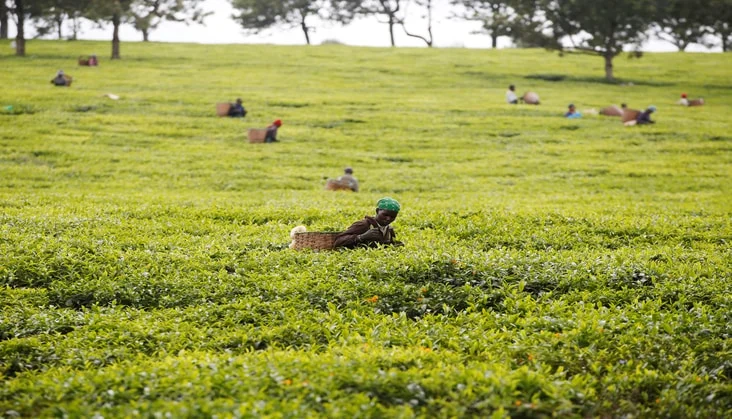
Kenya’s export architecture remains heavily concentrated in primary agricultural commodities, a structure that generates immense exposure to external geopolitical and supply chain shocks. In 2024, total exports reached USD 8.74 billion. The export ledger is fundamentally dominated by Tea (USD 1.4 billion), Refined Petroleum (primarily re-exports to landlocked neighbors) (USD 907 million), Cut Flowers (USD 780 million), Tropical Fruits (USD 320 million), and Coffee (USD 313 million). Kenya proudly maintains its position as the world’s largest global exporter of tea.
Conversely, the national import bill—totaling an expansive USD 23.6 billion—is dominated by essential capital goods, energy, and foodstuffs required to sustain the population and infrastructure projects. Top imports include Refined Petroleum (USD 4.39 billion), Palm Oil (USD 987 million), Wheat (USD 625 million), Packaged Medicaments (USD 557 million), and Rice (USD 494 million). The primary origins for these imports are heavily tilted toward Asia and the Middle East, specifically China (USD 6.01 billion), India (USD 2.54 billion), and the United Arab Emirates (USD 2.52 billion).
| Trade Category | Top 5 Commodities (2024 Value) | Top 5 Trading Partners |
| Exports ($8.74B) | Tea ($1.4B), Refined Petroleum ($907M), Cut Flowers ($780M), Tropical Fruits ($320M), Coffee ($313M) | Uganda, USA, UAE, Netherlands, Pakistan |
| Imports ($23.6B) | Refined Petroleum ($4.39B), Palm Oil ($987M), Wheat ($625M), Medicaments ($557M), Rice ($494M) | China, India, UAE, USA, Malaysia |
Data compiled from the Observatory of Economic Complexity (OEC) and World Bank WITS.
The fragility of this commodity-heavy export profile was acutely exposed by geopolitical escalations in the Middle East during late 2025 and early 2026. The intensifying conflict and the subsequent disruption of commercial shipping lanes via the Strait of Hormuz and the Red Sea drastically increased global maritime insurance premiums and freight costs. This geopolitical tension placed an estimated USD 32.8 million (KES 4.26 billion) worth of critical Kenyan tea exports destined for Iran at immediate and severe risk. Airspace closures and the suspension of cargo routes threatened the logistics for these highly perishable agricultural outputs, exposing the inherent vulnerability of relying on highly concentrated, politically unstable export destinations.
Regional Integration: The EAC and AfCFTA
To systematically mitigate these external global shocks and reduce reliance on volatile extra-continental markets, Kenya is aggressively pivoting toward regional trade dominance. Operating as the premier commercial, digital, and logistical gateway to East Africa, Kenya has assumed a vanguard leadership role within both the East African Community (EAC) and the broader African Continental Free Trade Area (AfCFTA).
Under its recent chairmanship of the EAC, spanning 2024 to 2025, Kenya prioritized a comprehensive six-pillar integration agenda. This strategy focused heavily on expanding the regional internal market, accelerating the implementation of the Customs Union, eliminating persistent Non-Tariff Barriers (NTBs), and advancing digital trade integration through sophisticated platforms such as the EAC Trade Portal.
On the continental stage, Kenya has emerged as one of the earliest and most enthusiastic implementers of the AfCFTA framework. Through the AfCFTA Guided Trade Initiative, Kenya became one of the first African nations to officially ratify the agreement and commence tangible physical exports under its protocols. Supported by the Kenya National AfCFTA Implementation Strategy (2022–2027), the government has successfully mobilized 33 domestic firms and issued over 100 certificates of origin for cross-border shipments, deliberately targeting agriculture, livestock, and fisheries as priority sectors for regional value chain expansion.
This physical trade integration is inextricably linked to, and heavily supported by, Kenya’s digital prowess. Billions of dollars in diaspora remittances, channeled through indigenous fintech platforms like M-Pesa, Chipper Cash, and Flutterwave, are rapidly evolving beyond simple consumer payments. These digital flows are being transformed into vital streams of SME funding, cross-border trade finance, and peer-to-peer lending networks spanning Uganda, Tanzania, Rwanda, and South Sudan. However, institutional analysts caution that the full realization of intra-African service trade remains hamstrung by deeply fragmented regulatory environments, complex and restrictive visa requirements, and the sluggish mutual recognition of professional qualifications, which collectively limit the cross-border mobility of skilled labor.
Foreign Direct Investment and the Maturation of the “Silicon Savannah”
The landscape of Foreign Direct Investment (FDI) in Kenya reveals a highly dynamic, yet distinctly bifurcated, investment ecosystem. In a global macro environment where worldwide FDI flows contracted by 11% in 2024, FDI inflows into the Eastern and Southern Africa region defied gravity, surging by an unprecedented 154% to reach an all-time regional high of USD 65 billion. Kenya emerged as one of the top five destination countries on the continent—alongside Egypt, Ethiopia, Uganda, and the DRC—absorbing a combined 90% of these massive capital inflows.
This sustained capital attraction is driven heavily by Kenya’s globally recognized technological innovation ecosystem, colloquially branded the “Silicon Savannah.” Centered in Nairobi, the sector is characterized by an exceptional mobile penetration rate exceeding 90% and the near-universal adoption of digital finance; nearly 60% of all Kenyan adults actively utilize mobile wallets for daily transactions. Recognizing this unparalleled digital infrastructure, global technology and financial conglomerates, including Microsoft and Visa, have anchored their primary African research, development, and innovation studios in Nairobi. This corporate migration signals deep, long-term institutional confidence in the local talent pool, English proficiency, and the supportive regulatory frameworks championed by the government.
The Evolution of Venture Capital: The Pivot to Debt Financing
A granular, transaction-level analysis of Kenya’s startup funding pipeline reveals a highly nuanced and maturing financial transition. In 2025, Kenyan startups raised approximately USD 1.04 billion in total capital—the highest volume of any single African market since 2022. By some metrics, this represented a 52% to 72% year-on-year growth rate, allowing Kenya to capture nearly a third of all startup capital raised across the entire African continent.
However, the underlying structural composition of this capital infusion diverges sharply from traditional, Silicon Valley-style venture capital paradigms. Of the USD 1.04 billion raised, approximately 60% of the total capital—roughly USD 582 million—was secured as debt financing, rather than equity. Furthermore, this liquidity was hyper-concentrated in a handful of massive megadeals directed almost exclusively at asset-heavy, energy-access, and consumer finance infrastructure conglomerates.
Four of the nine megadeals recorded across all of Africa in 2025 landed in Kenya, accounting for USD 610 million of the country’s total. The most prominent transactions included a massive USD 300 million receivables-backed facility for d.light, and a USD 156 million securitization deal for Sun King, structured by major commercial banks like Citi and Stanbic Bank.
This structural pivot indicates a profound maturation and risk-aversion within the investment climate. Global investors deploying capital into the Silicon Savannah are heavily prioritizing businesses with predictable, highly modeled cash flows and asset-backed operational models over speculative, hyper-growth software scaling. The blurring of traditional lines between venture capital, infrastructure finance, and development funding highlights an ecosystem that is increasingly focused on tangible utility and credit-risk assessment. While this debt-driven growth successfully capitalizes large-scale green technology, solar distribution networks, and e-commerce logistics (a sector projected to reach USD 4.5 billion by 2025), it simultaneously masks a concerning reality for early-stage founders. The number of individual Kenyan ventures successfully raising early-stage equity rounds (above USD 100,000) actually fell by 23% in 2025, representing the steepest decline among Africa’s major startup markets.
To sustain FDI attractiveness and alleviate the bureaucratic friction that often deters early-stage equity investors, the government has instituted progressive administrative reforms through the Kenya Investment Authority (KenInvest). KenInvest is mandated to establish a streamlined, single-window system for corporate licensing, work permits, and tax registration via its eRegulations database. However, persistent operational challenges remain; KenInvest’s authority often does not extend to crucial, decentralized permits at the county level, and widespread perceptions of public sector corruption (with Kenya ranking 121st out of 180 countries globally) continue to inject significant operational risk into the broader investment climate.
Infrastructure Financing, Geo-Economics, and Security Logistics
To structurally support its aggressive export ambitions, digital economy, and regional trade dominance, Kenya is currently executing a massive, generational overhaul of its physical infrastructure. However, recognizing the acute fiscal impossibility of continually funding these mega-projects through standard sovereign debt issuance, the government executed a radical shift in its infrastructure financing model. In early 2026, the Kenyan Parliament approved legislation establishing the National Infrastructure Fund (NIF).
Designed to mobilize an astounding KES 5 trillion (approximately USD 38.7 billion) over the next decade, the NIF aims to fundamentally transition infrastructure financing away from public borrowing toward a blended-capital model. By aggressively utilizing Public-Private Partnerships (PPPs), asset monetization, and sovereign wealth mechanisms, the NIF is engineered to attract both private institutional capital and public funds to finance transport, energy, water, and digital connectivity projects without triggering debt distress.
This innovative financing strategy is explicitly designed to revive critical, high-impact projects that had previously stalled due to severe budgetary constraints. Foremost among these is the highly anticipated extension of the Standard Gauge Railway (SGR). With preparatory works and compensation surveys already underway, the physical construction of the SGR extension from Naivasha to Kisumu, and subsequently onward to the Malaba border, is scheduled to commence in early to mid-2026. This strategic rail link is paramount for Kenya’s geopolitical trade strategy; by establishing a seamless rail connection from the deep-water Port of Mombasa directly to the Ugandan border, Kenya aims to decisively recapture lucrative transit cargo volumes destined for landlocked markets (Uganda, Rwanda, DRC, and South Sudan), which had increasingly been diverted south to Tanzania’s competing Central Corridor. Concurrently, massive urban infrastructure projects, such as the construction of the Thika Expressway slated for September 2026, aim to alleviate severe logistical bottlenecks in the capital.
The LAPSSET Corridor: The Intersection of Economics and Security
Kenya’s most ambitious geo-economic undertaking remains the Lamu Port-South Sudan-Ethiopia Transport (LAPSSET) Corridor. Originally conceived purely as a developmental mega-project, LAPSSET is designed to integrate the historically marginalized northern regions of Kenya with Ethiopian and South Sudanese markets via an expansive, multi-modal matrix of ports, oil pipelines, and highways. The project achieved a major historical milestone in February 2026 with the full operationalization of the Lamu deep-sea port, marked by the simultaneous docking and offloading of three international cargo ships, establishing a crucial secondary maritime gateway to complement Mombasa.
The developmental timeline for the corridor remains highly protracted. Feasibility and design phases for the Kenyan segment are concluding, with heavy physical construction slated for the 2027–2032 window. The Ethiopian segment targets implementation between 2030 and 2038, while the highly complex South Sudan segment is projected for 2033–2043, aiming for full multinational network operational capacity by 2045.
However, the operational reality of LAPSSET has rapidly evolved beyond pure developmental economics into a highly complex, militarized security apparatus. Institutional risk analysts note that the corridor is increasingly governed by a stringent “security logic”. Counterinsurgency requirements, proactive troop deployments, the management of massive refugee populations, and maritime risk assessments in the Indian Ocean now dictate the tempo of construction and the calculus of investment risk as heavily as engineering constraints. Furthermore, LAPSSET is inextricably entangled in external geopolitical power competition; as China invests billions to stitch together the Horn of Africa, and the United Arab Emirates expands its logistical footprint across Ethiopian and Somaliland ports, the corridor operates as a primary theater for shifting geopolitical alliances and strategic access to the African interior.
Tourism, Services, and the Post-Pandemic Rebound
Serving as a vital, stabilizing pillar for foreign exchange earnings and mass employment generation, Kenya’s travel and tourism sector has demonstrated a spectacular, V-shaped post-pandemic recovery. In 2024, the sector contributed an estimated record of KES 1.2 trillion to the national economy—representing a robust 10% year-on-year increase—and directly supported 1.7 million jobs across the hospitality and service spectrum.
The volume of inbound international tourist arrivals surged to a record 2.39 million visitors in 2024, reflecting a nearly 15% increase from the 2.08 million arrivals recorded in 2023. This steep, upward trajectory signifies a total sectoral recuperation and a confident expansion well beyond the pre-pandemic baselines of 2019. The demographic breakdown of these arrivals highlights strong bilateral ties; the United States continues to anchor the sector as the absolute primary source market, contributing 12.8% of total arrivals (roughly 306,500 visitors), followed closely by deeply integrated regional partners Uganda (9.4%) and Tanzania (8.4%). Financial receipts mirrored this physical influx, with international visitor spending reaching KES 288 billion, acting as a vital complement to robust domestic tourism spending which totaled KES 528 billion.
A primary operational catalyst for this accelerated sectoral growth was the strategic, government-led implementation of the Electronic Travel Authorisation (ETA) system. This digitized framework universally replaced the traditional, highly bureaucratic, and often opaque visa application process for the vast majority of international travelers. By instituting these simplified, virtually visa-free travel policies, the government drastically reduced entry friction, immediately enhancing Kenya’s competitive positioning as a premier global destination for spontaneous leisure travel, eco-tourism, and highly lucrative international Meetings, Incentives, Conferences, and Exhibitions (MICE).
Looking forward to the medium term, the Ministry of Tourism and Wildlife projects that the sector possesses the momentum to attract 3.0 million international visitors by the conclusion of 2025, forecasting a direct injection of KES 560 billion in tourism earnings. Long-term strategic targets established by the administration aim to elevate visitor numbers to an unprecedented 5.0 million annually by 2027. Achieving this target would successfully scale the sector’s contribution to an equivalent of 10% of the national GDP, thereby providing a massive, decentralized employment engine and a crucial, structural stabilizing force for the Kenyan Shilling against global currency volatility.
Strategic Outlook and Macroeconomic Conclusions
The macroeconomic profile of the Republic of Kenya moving into the 2026–2027 operational window presents a compelling narrative of structural transition. The underlying fundamentals of the economy exhibit remarkable, world-class dynamism. This resilience is propelled by a highly adaptive and digitizing service sector, a record-breaking recuperation in tourism inflows, and the sustained, debt-fueled expansion of the Silicon Savannah innovation hub, which continues to attract the lion’s share of continental foreign direct investment. Furthermore, aggressive regional integration initiatives—most notably Kenya’s vanguard leadership in the AfCFTA and the operationalization of the massive LAPSSET logistical corridor—are methodically positioning the nation as the undisputed commercial, technological, and maritime epicenter of East Africa.
However, the ultimate realization of Kenya’s long-term economic transformation remains heavily tethered to the state’s ability to delicately manage its profound structural constraints. The sovereign balance sheet remains highly leveraged, with debt servicing costs consuming a disproportionate and unsustainable share of domestic revenue. This fiscal straitjacket necessitates aggressive, and occasionally growth-constricting, tax reforms that risk alienating the domestic MSME base. Consequently, the successful execution of the National Infrastructure Fund (NIF) represents an absolutely vital, pragmatic shift toward off-balance-sheet, PPP-driven financing. This transition is historically crucial for completing vital regional trade arteries, such as the SGR extension, without triggering sovereign debt distress or IMF intervention.
Simultaneously, the domestic labor market requires profound structural intervention. With over 83% of the active labor force trapped in the informal economy, achieving the inclusive, bottom-up growth mandated by the BETA agenda demands aggressive pro-competitive regulatory reforms. Dismantling state-backed monopolies and lowering input costs are essential prerequisites to stimulate formal job creation and absorb the burgeoning, highly restive youth demographic.
Finally, the recurrent, devastating shocks imposed by climate change—manifesting as extreme, GDP-contracting flooding and severe agricultural heat stress—dictate that agricultural modernization and climate adaptation financing must transition from peripheral environmental policy considerations to the absolute center of national macroeconomic risk management. If Kenya can successfully navigate its immediate debt obligations while aggressively protecting private sector credit expansion, the structural, infrastructural, and digital investments currently being deployed will ensure its robust, diversified economic leadership across the African continent for the coming decade.