

The Republic of Kenya represents the preeminent economic, diplomatic, and ecological anchor of East Africa. Functioning as the primary logistical gateway for international visitors, the nation offers a profound geographical and cultural duality, seamlessly integrating the untamed, primordial wilderness of the Great Rift Valley with the hyper-modernized, cosmopolitan infrastructure of Nairobi and the ancient, Islamic trade ports of the Swahili Coast. In 2026, the operational landscape for international travel to Kenya reflects a highly digitized administrative framework, evolving epidemiological considerations, and a sophisticated, multi-tiered stratification of the hospitality sector.
- Regulatory Framework: Entry Protocols and Border Administration
- The Electronic Travel Authorization (eTA) Architecture
- Differentiated Authorization Categories
- The East African Tourist Visa Integration
- Health, Wellness, and Epidemiological Preparedness
- Security Architecture and Risk Management
- Geopolitical Risks and Border Insecurity
- Urban Crime Dynamics in Nairobi
- Transportation and Highway Safety
- Aviation Logistics and Internal Transit Networks
- Ecological Dynamics and Safari Topography
- Hospitality Stratification: Lodging and Economic Typologies
- Socio-Cultural Etiquette and Linguistic Integration
- Greetings, Respect, and Physical Interaction
- Linguistic Bridges: The Utility of Swahili
- Dining and Sartorial Norms
- Urban Hubs, Coastal Heritage, and Historical Trajectories
- Specialized Expeditions and Global Events
- Technological Prerequisites and Infrastructure
- Strategic Conclusions
This comprehensive report provides an exhaustive, expert-level analysis of the logistical, cultural, economic, and security paradigms defining the Kenyan travel sector. By synthesizing current regulatory protocols, epidemiological data, aviation logistics, safari ecosystem dynamics, and socio-cultural etiquette, this document serves as a foundational resource for travel professionals, corporate risk managers, and itinerary strategists. The analysis delves into the structural shifts in border administration through electronic travel authorizations, assesses the ongoing mitigation of endemic health risks, evaluates the layered security environment across urban and rural frontiers, and maps the complex economic models underpinning the nation’s tourism industry.
Regulatory Framework: Entry Protocols and Border Administration
The Kenyan government has systematically overhauled its border administration protocols, transitioning entirely from traditional consular visa issuance toward a fully digitized Electronic Travel Authorization (eTA) system. This semi-automated infrastructure is engineered to determine the preliminary eligibility of foreign nationals prior to their arrival, thereby streamlining immigration processing, minimizing border congestion, and simultaneously fortifying national security parameters against trans-national threats.
The Electronic Travel Authorization (eTA) Architecture
The implementation of the eTA is a mandatory prerequisite for all international travelers, encompassing all demographics including infants and minor children. Exemptions are strictly limited to citizens of specific East African Community (EAC) Member States—namely the Republic of Burundi, the Democratic Republic of the Congo, the Republic of Rwanda, the Republic of South Sudan, the Republic of Uganda, and the United Republic of Tanzania. The eTA does not guarantee admission into the Republic of Kenya; final admissibility remains entirely at the discretion of border control officers stationed at the port of entry. However, it is an absolute requirement for boarding inbound commercial flights, and failure to secure this authorization prior to departure will invariably result in denied boarding by airline personnel or substantial punitive financial penalties upon arrival.
The standard administrative processing timeline for a standard Kenya eTA application is three working days; therefore, travelers are strongly advised by the Directorate of Immigration Services to initiate the process well in advance of their departure to accommodate any unforeseen bureaucratic delays. The digital application mandates the submission of extensive biographic data and supporting documentation. Applicants must possess a valid passport exhibiting a minimum of six months of remaining validity post-arrival and containing at least one blank page for immigration stamping. Additional mandatory uploads include a recent digital passport-style photograph or selfie, comprehensive contact information including home address and telephone numbers, a confirmed travel itinerary detailing arrival and departure flight numbers, and verifiable proof of accommodation such as hotel booking confirmations or an official letter of invitation if residing with domestic hosts. A valid credit or debit card is required to remit the processing fees. Furthermore, depending on the specific nature of the visit, supplementary documentation may be mandated. For instance, business travelers must upload an employment contract or conference invitation, while medical tourists are required to provide an official referral letter from a recognized hospital facility.
Differentiated Authorization Categories
The Kenyan eTA system accommodates various traveler profiles through specialized authorization tiers, each carrying distinct validity periods, entry parameters, and fee structures. For standard international tourists, the baseline 1-Year Multiple Entry eTA is available at an official government rate of USD 20, permitting unrestricted multiple re-entries for tourism or business over a twelve-month period without any restrictions on the fundamental purpose of the visit. For travelers facing emergent circumstances, an Expedited eTA is available for USD 100, which guarantees immediate systemic approval upon the successful submission of the application.
Citizens of the United States possess access to a highly specialized bilateral authorization: the USA 5-Year Multiple Entry eTA. This long-term authorization is officially priced at USD 100 by the Kenyan government and allows American passport holders to enter and exit the country continuously over a five-year lifespan, with each individual stay capped at a maximum of 90 days. This tier is highly advantageous for corporate consultants, non-governmental organization personnel, frequent safari enthusiasts, and expatriates maintaining ongoing commercial or familial ties in East Africa. It is imperative to note, however, that while the baseline government fee is USD 100, travelers utilizing third-party digital facilitation services or visa aggregators may encounter highly inflated cumulative costs. For example, certain commercial processing platforms list the total cost of the 5-Year eTA at USD 386.59, which includes the government fee alongside substantial application service surcharges.
The East African Tourist Visa Integration
For travelers pursuing multi-nation itineraries across the broader East African bloc, the East African Tourist Visa presents a highly efficient diplomatic and logistical mechanism. Priced at a flat rate of USD 100, this joint authorization permits 90 days of multiple-entry travel exclusively between the partner states of Kenya, Uganda, and Rwanda. It is a critical enabler for regional tourism, allowing visitors to seamlessly combine, for instance, a mountain gorilla primate tracking expedition in the dense rainforests of Rwanda or Uganda with a traditional open-savannah safari in the Kenyan Masai Mara without incurring redundant, cumulative visa fees.
The operational parameters of the East African Tourist Visa are strict. The authorization is strictly limited to tourism purposes, explicitly prohibiting any form of domestic employment within the bloc. It is non-renewable upon expiry, and the visa is automatically invalidated if the traveler exits the designated three-nation bloc for a non-member state. Notably, the United Republic of Tanzania remains excluded from this joint diplomatic agreement as of early 2026; consequently, any cross-border movement from Kenya southward into the Serengeti ecosystem or toward Mount Kilimanjaro necessitates the procurement of a separate, sovereign Tanzanian visa. The application for the East African Tourist Visa must be initiated through the digital immigration portal of the specific country that serves as the traveler’s initial point of entry.
| Authorization Type | Eligible Demographics | Validity Period | Government Fee | Entry Allowance |
| Standard Kenya eTA | Global Citizens (Non-EAC) | 1 Year | USD 20 | Multiple Entry |
| Expedited eTA | Global Citizens (Urgent) | Varies | USD 100 | Immediate Approval |
| USA 5-Year eTA | United States Citizens Only | 5 Years (90 days/stay) | USD 100 | Multiple Entry |
| East African Tourist Visa | Global Citizens | 90 Days | USD 100 | Multiple Entry (Kenya, Uganda, Rwanda) |
Health, Wellness, and Epidemiological Preparedness
Operating within an equatorial, tropical, and highly biodiverse geographical zone, Kenya presents specific epidemiological profiles that require rigorous, proactive medical preparation by all incoming travelers. Global health authorities, including the World Health Organization (WHO) and the U.S. Centers for Disease Control and Prevention (CDC), continuously update their prophylactic recommendations to mitigate the transmission of endemic pathogens and safeguard international public health.
Malaria Transmission and Prophylaxis Protocols
Malaria remains a primary, life-threatening health concern across substantial portions of the Kenyan interior, particularly in lower-altitude, high-humidity regions such as the coastal belt and the Lake Victoria basin. The disease is transmitted via infected Anopheles mosquitoes, which are predominantly active from dusk until dawn. Because specific strains of the Plasmodium falciparum parasite in East Africa exhibit high evolutionary resistance to certain traditional medications, the CDC emphatically mandates the use of targeted, modern chemoprophylaxis tailored to the specific resistance profiles of the region.
According to the 2026 CDC Yellow Book (authored by experts such as Alison D. Ridpath and Kimberly E. Mace), travelers are advised to utilize one of several highly effective antimalarial regimens. Doxycycline, administered daily at an adult dose of 100 mg (or 2.2 mg/kg for pediatric patients over eight years old), provides comprehensive protection across all malaria-endemic areas. Mefloquine, taken on a weekly basis, serves as a viable alternative, though travelers must consult medical professionals regarding potential neuropsychiatric contraindications. Hydroxychloroquine is also listed for specific instances, administered at a weekly adult dose of 310 mg base. Conversely, traditional Chloroquine is explicitly not recommended for travel to Kenya, as the local parasite strains have developed robust, widespread resistance to this specific pharmacological compound. The selection of a prophylactic regimen must be highly individualized, factoring in the traveler’s age, physiological profile, and the specific geographic zones encompassed by their itinerary.
Beyond pharmaceutical interventions, significant scientific advancements are being pursued within Kenya’s borders to combat malaria at a systemic level. The CDC, in deep collaboration with the Kenya Medical Research Institute (KEMRI) and the Liverpool School of Tropical Medicine, is currently conducting advanced clinical trials in western Kenya. These trials are evaluating the efficacy of L9LS, a promising monoclonal antibody designed to provide sustained, long-term protection, particularly for vulnerable pediatric populations. These trials represent a critical evolution in global health, shifting the paradigm from daily chemoprophylaxis and moderately effective multi-dose vaccines (such as RTS,S) toward long-term immunological shielding.
Routine Immunizations and Emerging Viral Threats
The routine immunization framework recommended for travelers to Kenya encompasses broad-spectrum protections against foodborne, waterborne, and airborne pathogens. Standard advisories dictate that travelers ensure their vaccines for Typhoid, Hepatitis A, Hepatitis B, Cholera, and Polio are current. Additionally, standard adult boosters for Tetanus, Diphtheria, and Pertussis (TDAP), as well as Measles, Mumps, and Rubella (MMR), should be verified prior to departure. Older travelers or those who are immunocompromised are advised to seek out Shingles, Influenza, COVID-19, and dual-dose Pneumonia vaccinations.
In early 2026, global health authorities issued an escalated Level-2 travel advisory specifically regarding Polio. This alert was triggered by the alarming detection of circulating poliovirus in wastewater surveillance systems across numerous countries globally, spanning Europe, the Middle East, and Africa, including Kenya. The advisory urges international travelers to practice enhanced precautions, mandating that adults who were previously fully vaccinated in childhood consider receiving a single, lifetime booster dose prior to international transit to fortify their immunological defenses against potential environmental exposure.
Furthermore, the WHO and the Kenyan government stipulate stringent regulations regarding Yellow Fever, an acute viral hemorrhagic disease transmitted by infected mosquitoes. While Kenya itself is classified as a Yellow Fever endemic zone, proof of Yellow Fever vaccination is officially required for entry only if the traveler is arriving from, or has transited for more than 12 hours through, another sovereign state characterized by endemic Yellow Fever transmission. This encompasses vast territories across Central and West Africa (e.g., Angola, DRC, Nigeria) and South America (e.g., Brazil, Colombia, Peru). Failure to produce a valid International Certificate of Vaccination or Prophylaxis (commonly known as the “Yellow Card”) under these specific circumstances will result in immediate denial of entry or mandatory, highly restrictive quarantine at the border.
| Disease Threat | Primary Transmission Vector | Recommended Intervention | Dosage/Regimen Specifications |
| Malaria | Mosquito (Anopheles) | Doxycycline | Adult: 100 mg orally, 1x/day |
| Malaria | Mosquito (Anopheles) | Mefloquine | Adult: Weekly dosage required |
| Polio | Food & Water / Fecal-Oral | Polio Vaccine Booster | Single lifetime adult booster recommended |
| Yellow Fever | Mosquito | YF Vaccination | Required if arriving from endemic zones |
| Typhoid | Food & Water | Typhoid Vaccine | Recommended for most regions |
| Hepatitis A/B | Food & Water / Bodily Fluids | Hep A/B Vaccine | Routine traveler recommendation |
Security Architecture and Risk Management
Kenya maintains a highly complex security environment characterized by profoundly localized risk paradigms. While the vast majority of international tourism occurs within heavily fortified and professionally managed wildlife conservation zones or secure coastal resort enclaves, the broader geopolitical and socioeconomic landscape requires rigorous, ongoing situational awareness.
Geopolitical Risks and Border Insecurity
The United States Department of State consistently maintains an overarching “Level 2: Exercise Increased Caution” travel advisory for the entirety of the Republic of Kenya. This baseline risk assessment is primarily driven by persistent, diffuse threats of terrorism, systemic crime, and localized civil unrest. However, the risk distribution across the nation’s geography is profoundly asymmetrical. Extreme, life-threatening hazards are concentrated almost exclusively along the eastern and northern frontiers, prompting strict “Level 4: Do Not Travel” designations for specific border counties. Specifically, the counties of Mandera, Wajir, and Garissa are subject to frequent, highly violent incursions by militant extremist organizations, most notably Al-Shabaab. These groups engage in asymmetric warfare, utilizing kidnapping operations, targeted assassinations, and the deployment of improvised explosive devices against security forces and civilian targets.
Similar absolute travel prohibitions extend to Tana River County and coastal territories north of the town of Malindi, as well as specific, isolated sectors of West Pokot, Turkana, and Marsabit counties situated within 30 miles (50 kilometers) of the Ethiopian border, where resource-driven banditry, cattle rustling, and violent cross-border tribal incursions remain endemic. United States government personnel and their dependents are categorically forbidden from traveling to these high-risk peripheral zones under any circumstances. It is critical for the travel strategist to recognize, however, that these volatile frontier regions are geographically isolated and situated hundreds of kilometers away from the premier tourist circuits in the central highlands, the Great Rift Valley, and the southern conservation areas.
Urban Crime Dynamics in Nairobi
Within the sprawling metropolitan confines of Nairobi, the paramount security concerns pivot rapidly from organized terrorism to opportunistic and occasionally violent urban street crime. Criminal activity, including armed carjackings, violent muggings, and aggressive home invasions, occurs with troubling frequency, often targeting affluent locals and easily identifiable expatriates. These severe incidents are particularly concentrated in densely populated, socioeconomically deprived neighborhoods and informal settlements such as Eastleigh and Kibera, where local law enforcement often lacks the tactical resources, training, and operational bandwidth to maintain continuous civic order.
A highly prevalent and rapidly evolving criminal tactic in the capital involves “motorcycle snatch-and-grab” operations. In these scenarios, thieves operating on fast, highly maneuverable two-wheeled motorized vehicles exploit heavily congested urban traffic to violently appropriate handbags, mobile communications devices, and other accessible valuables from distracted pedestrians or passengers seated in vehicles with open windows. To mitigate this specific, daily threat, security experts and local residents advise maintaining a hyper-vigilant posture when walking near roadways, keeping all vehicular windows rolled up, leaving adequate distance between vehicles to prevent being boxed in, and locking all doors while transiting through urban traffic gridlock.
Furthermore, international visitors are frequently targeted by sophisticated social engineering operations and digital scams. A common urban extortion tactic involves criminals impersonating plainclothes police officers, government officials, or private security personnel. These actors aggressively demand the surrender of passports, identification documents, or digital devices under the guise of an official investigation or security audit, subsequently demanding extortionate cash payments for their immediate return. Travelers are strictly advised never to surrender original documentation without verifiable confirmation of the officer’s identity, to carry only photocopies of their passports on their person, and to immediately contact their respective consular missions if detained. Additionally, sophisticated criminal syndicates increasingly utilize digital dating applications and social media platforms to lure unsuspecting travelers—particularly those identifying as LGBTQ+—into compromised, isolated locations where they are subsequently subjected to violent assault, robbery, or prolonged blackmail.
Transportation and Highway Safety
Surface transportation in Kenya presents substantial physical risks, largely driven by inadequate infrastructure maintenance, erratic local driving behaviors, and systemic regulatory enforcement failures. The deployment of privately operated public transportation vans, colloquially known as matatus, constitutes one of the most severe hazards on Kenyan roadways. Matatus are notorious for disregarding foundational traffic laws, engaging in highly aggressive, high-speed maneuvers, driving on median strips against the flow of traffic, and operating vehicles in advanced states of mechanical disrepair. Consequently, they are frequently involved in catastrophic, high-fatality collisions. The danger is deemed so severe that U.S. government personnel are officially and unconditionally prohibited from utilizing matatus for any purpose.
Similar stringent restrictions apply to boda bodas—the ubiquitous motorcycle taxis that weave aggressively and unpredictably through urban gridlock. While highly efficient for bypassing traffic jams, boda bodas offer zero physical protection and are statistically vastly overrepresented in severe trauma admissions at urban medical centers. For secure urban transit, travelers must exclusively utilize reputable, application-based ride-hailing services or private vehicular transports arranged directly through secure hotel concierge desks or licensed tour operators. Inter-city travel after sunset should be categorically avoided due to the compounded risks of unilluminated roadways, wandering livestock, unmarked construction hazards, and the elevated potential for highway banditry.
Aviation Logistics and Internal Transit Networks
Accessing the Kenyan interior requires navigating a complex matrix of intercontinental aviation corridors and highly specialized domestic transit networks. Nairobi’s Jomo Kenyatta International Airport (NBO) serves as the undisputed aviation hub of East Africa, facilitating the overwhelming majority of inbound intercontinental traffic, while Moi International Airport (MBA) in Mombasa provides targeted, direct access to the Swahili Coast.
Transatlantic Flight Corridors and Pricing
For travelers departing from the North American eastern seaboard, specifically the New York metropolitan area (JFK or EWR), reaching Kenya involves comprehensive logistical planning due to the vast geographical distance involved. The most time-efficient routing is the direct, non-stop service operated by the national carrier, Kenya Airways (frequently operating under a codeshare agreement with Delta Air Lines or Air France), which connects JFK to Nairobi in approximately 14 hours utilizing Boeing 787-8 aircraft.
For travelers prioritizing premium cabin experiences, specific alliances, or competitive pricing over sheer speed, a multitude of highly rated international carriers offer one-stop itineraries through massive global mega-hubs. Qatar Airways routes via Doha (DOH), Emirates via Dubai (DXB), Turkish Airlines via Istanbul (IST), and Ethiopian Airlines via Addis Ababa (ADD). European carriers such as Lufthansa (connecting via Frankfurt) and Swiss International Air Lines also offer robust connectivity to both Nairobi and Mombasa. These layover-dependent routes typically expand total transit times to between 17 and 24 hours, depending on the duration of the connection (ranging from brief 1-hour layovers to extended 3.5-hour waits).
Pricing for transatlantic round-trip airfare exhibits significant seasonal volatility. Economy class tickets generally oscillate between USD 1,000 and USD 2,250. For instance, a round-trip on Lufthansa or Swiss from New York to Mombasa can be secured for approximately USD 1,010 to USD 1,030 during non-peak months like April, whereas high-season travel pushes baseline fares well above USD 1,300.
| Operating Carrier | Origin Hub | Connecting Hub | Destination | Estimated Duration | Typical Price Range (Economy) |
| Kenya Airways | JFK | Direct (Non-stop) | NBO / MBA | ~14 Hours | USD 1,065 – USD 2,250 |
| Ethiopian Airlines | JFK / EWR | Addis Ababa (ADD) | NBO / MBA | ~17 – 21 Hours | USD 1,300 – USD 2,100 |
| Qatar Airways | JFK | Doha (DOH) | NBO / MBA | ~19 – 22 Hours | Varies significantly |
| Turkish Airlines | JFK / EWR | Istanbul (IST) | NBO / MBA | ~18 – 23 Hours | USD 1,141 – USD 3,250 |
| Emirates | JFK | Dubai (DXB) | NBO / MBA | ~20 – 24 Hours | Varies significantly |
Domestic Rail and Air Networks
Upon arriving in Kenya, domestic connectivity relies heavily on a modernized rail network and a robust, highly specialized light-aircraft industry. The Standard Gauge Railway (SGR), operating the Madaraka Express, represents a monumental leap in domestic infrastructure, directly linking the capital city of Nairobi with the coastal port of Mombasa. This rail service offers a highly secure, punctual, and visually spectacular transit alternative to the deeply hazardous Mombasa Highway. Security protocols at SGR terminals are stringent, mirroring international airport-level screening procedures. Due to safety considerations, foreign diplomatic personnel are explicitly restricted to utilizing only the First Class or Premium cabins on the SGR to minimize exposure to petty theft and to facilitate rapid evacuation if required. An attempt to extend a secondary, older metre-gauge rail line from Nairobi to Kisumu on Lake Victoria was briefly operational but was suspended in July 2025 due to catastrophic line damage resulting from heavy seasonal rains.
For expeditious access to remote safari destinations, Kenya boasts a sophisticated network of localized, unpaved airstrips serviced by specialized charter and scheduled domestic airlines. Companies such as Tropic Air (stationed at Nanyuki airfield) and Boskovic Air Charters operate fleets of light aircraft, executing “fly-in” safaris that dramatically reduce transit times to isolated regions like the Masai Mara, Samburu, and Lamu Island. These domestic flights are integral to luxury itineraries, bypassing the arduous, rutted terrestrial routes that characterize the Kenyan interior, especially during the rainy seasons when dirt roads become impassable mud trenches.
Ecological Dynamics and Safari Topography
The core of Kenya’s global appeal lies in its unparalleled wildlife conservation areas. The nation’s approach to safari tourism is highly stratified, offering diverse ecological experiences that range from private, community-owned conservancies to massive, state-administered national parks.
Ecological Cycles and the Great Migration
The temporal planning of any Kenyan safari is fundamentally dictated by shifting meteorological patterns and the resulting cyclical movements of megafauna. The apex event of the global wildlife calendar is the Great Wildebeest Migration, wherein an estimated 1.5 million wildebeest, accompanied by hundreds of thousands of zebras and gazelles, traverse the interconnected Serengeti-Mara ecosystem in a relentless pursuit of nutrient-rich grazing lands generated by seasonal rainfall.
The primary window for observing this phenomenon within Kenya’s borders occurs during the long dry season, specifically from July through October. The absolute climax of the migration involves the dramatic, chaotic, and highly lethal crossings of the Mara River, which peak in August and September. During these months, the dense concentration of herbivores attracts a massive density of apex predators—lions, leopards, cheetahs, and massive Nile crocodiles—resulting in exceptionally intense wildlife viewing. However, this period also corresponds with maximum tourist density and peak-season premium pricing.
Travelers seeking a more solitary, nuanced experience may opt for the “shoulder seasons,” such as the period of the “short rains” in November and December. During these months, the landscape rapidly transforms into a verdant green, airborne dust is entirely minimized, and massive flocks of migratory avian species arrive, creating optimal conditions for specialized birdwatching and landscape photography. Early in the year (January to March), the vast herds are actually located southward in the Tanzanian Serengeti for the synchronized calving season, where hundreds of thousands of newborns attract intense, localized predator activity, particularly from cheetahs.
Key Conservation Ecosystems
The architectural backbone of Kenyan wildlife viewing is distributed across several distinct biomes, each offering unique topological and biological characteristics:
- Masai Mara National Reserve and Adjacent Conservancies: Located in the southwest, the Mara is the definitive open-savannah ecosystem. While the public National Reserve is famed for the river crossings, the adjacent private conservancies (such as Olare Motorogi, Naboisho, and Mara North) offer highly exclusive access. These private lands permit off-road driving, night game drives with spotlights, and guided terrestrial walking safaris—activities strictly prohibited within the heavily regulated main public reserve.
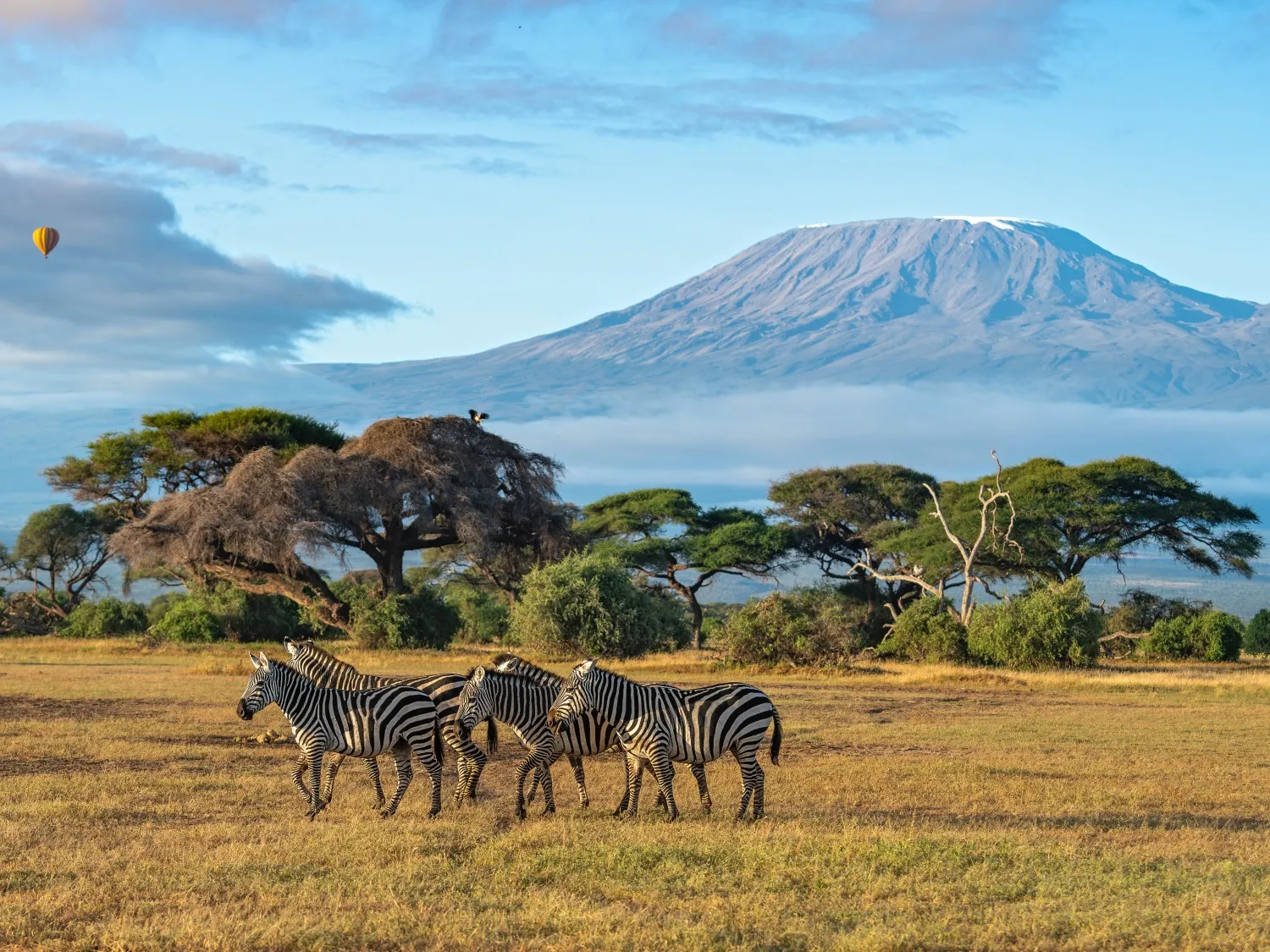
- Amboseli National Park: Situated in the south near the Tanzanian border, Amboseli is universally recognized for its vast, free-ranging herds of massive African elephants set against the dramatic, snow-capped backdrop of Mount Kilimanjaro. It is a premier destination for pachyderm observation and classical landscape photography.
- Tsavo National Parks (East and West): Representing Kenya’s largest protected wilderness area, Tsavo is a rugged, arid expanse famous for its “red elephants,” which coat themselves in the region’s oxidized volcanic soil. Tsavo East offers flat plains conducive to easy spotting, while Tsavo West is characterized by denser topography, dramatic lava flows, and the Mzima Springs—a vital hydrological oasis discharging 50 million gallons of water daily, supporting massive hippo and crocodile populations.
- Samburu National Reserve and Laikipia: Located in the arid northern frontier, these parks support highly specialized, drought-resistant species entirely absent in the southern parks, including the reticulated giraffe, Grevy’s zebra, and the long-necked gerenuk. The Ewaso Nyiro River forms a critical lifeline here, creating stunning wildlife congregations. Laikipia, characterized by privately managed community ranches, is a critical sanctuary for endangered black and white rhinoceros populations and the elusive African wild dog.
- Lake Nakuru and Specialized Viewing: Located in the Great Rift Valley, Lake Nakuru is famed for its alkaline waters that attract vast, shimmering pink flocks of flamingos, alongside highly protected rhinoceros populations. For budget-conscious travelers, incredible wildlife viewing can even be achieved for free by driving along transit roads adjacent to the Solio Reserve, the Lewa Conservancy, or Borana Wildlife Conservancy, where rhinos and ostriches frequently graze near the fencelines.
| Ecosystem | Topographical Profile | Key Wildlife / Features | Best Suited For |
| Masai Mara | Open Savannah Plains | Great Migration, Apex Predators | Classic Safari, Big Cats |
| Amboseli | Swamps and Dry Plains | Massive Elephant Herds, Mt. Kilimanjaro views | Photography, Pachyderms |
| Tsavo (East/West) | Arid Brush, Lava Flows | Red Elephants, Mzima Springs | Wilderness isolation, Birding |
| Samburu/Laikipia | Semi-Desert, Scrub | Grevy’s Zebra, Wild Dogs, Rhinos | Rare species, Conservation |
Hospitality Stratification: Lodging and Economic Typologies
The physical infrastructure of Kenyan safari hospitality is heavily segmented, directly correlating with pricing, exclusivity, and proximity to wildlife.
From Budget Camps to Ultra-Luxury Lodges
At the apex of the market, ultra-luxury properties redefine experiential exclusivity. Lodges such as the JW Marriott Masai Mara Lodge, Richard Branson’s Mahali Mzuri (featuring 12 tents in Olare Motorogi), and Angama Mara (perched on the edge of the Oloololo Escarpment with 30 tents) offer unparalleled opulence. These establishments are frequently located within private conservancies to guarantee absolute isolation from mass tourism. Accommodations consist of massive, customized canvas suites or glass-fronted pavilions featuring en-suite spa facilities, private viewing decks, plunge pools, and bespoke interior design. Service includes highly trained private guides utilizing state-of-the-art 4×4 Land Cruisers with guaranteed window seats, gourmet gastronomy, and exclusive activities such as hot-air balloon safaris. Pricing in this tier routinely spans from USD 1,500 to well over USD 3,000 per person, per night during peak migration season. Premium luxury camps like Cottar’s 1920s Camp (11 tents in Olderkesi) offer a similar vintage, high-end experience ranging from USD 1,000 to USD 2,000.
Conversely, travelers optimizing for economic efficiency utilize budget-focused tented camps and guesthouses. Notable examples include Mara Explorers Backpackers Camp, Talek Bush Camp, Rhino Tourist Camp, and Enchoro Wildlife Camp. These facilities are typically clustered outside the immediate boundaries of the national parks, specifically near entry gates like Sekenani or Talek, which slightly increases transit time into the reserve. Accommodations are structurally basic, often utilizing standard dome tents or simple cottages, and frequently feature shared ablution facilities rather than private en-suite bathrooms, forcing guests to walk outside to access plumbing. Safari activities in this bracket generally involve shared, crowded minivan transport rather than private 4x4s, and meals consist of standard, communal local fare. Prices generally range from USD 50 to USD 120 per night.
Between these extremes lie mid-range lodges, such as Ol Tukai Lodge in Amboseli or Mara Kempinski, which offer solid concrete construction, full plumbing, swimming pools, and excellent central locations within the parks for prices ranging from USD 150 to USD 400 per night.
Digital Finance and the Economics of Tipping
A backpacker or budget traveler utilizing public transportation and basic camps can expect daily expenditures ranging from USD 50 to USD 70. Mid-range travel, incorporating domestic flights, comfortable lodges, and organized tours, elevates the daily burn rate to between USD 100 and USD 150 (excluding mandatory daily park entry fees).
Kenya operates a highly advanced digital financial infrastructure, predominantly through the ubiquitous M-Pesa system. Securing a local SIM card to access M-Pesa is highly recommended, allowing seamless digital payments for everything from rural marketplace vendors to national park entry gates and train tickets. For physical cash withdrawals, major international banking networks operate extensively. Financial institutions such as Stanbic Bank, KCB Bank, Co-operative Bank, and Barclays (Absa) provide reliable ATM access. Travelers utilizing modern fintech solutions like Revolut or Wise can circumvent excessive currency conversion fees, though they must remain vigilant against independent surcharge fees levied directly by local ATM operators. When an ATM prompts for a Dynamic Currency Conversion (DCC), fiscal prudence dictates selecting to be charged in the local currency (Kenyan Shillings) rather than the home currency to secure a superior interbank exchange rate.
Within the Kenyan tourism paradigm, tipping is not merely a gesture of appreciation; it acts as a critical, direct economic redistribution mechanism that sustains local communities and fuels grassroots conservation efforts. While not legally mandatory, gratuities constitute a substantial proportion of the take-home income for guides, trackers, and camp staff. The industry standard dictates that a primary safari guide should be tipped between USD 10 and USD 15 per guest, per day, reflecting their critical role in ensuring safety and locating elusive wildlife. An additional USD 5 to USD 10 per guest, per day is typically placed in a communal “camp box” to be equitably distributed among the unseen infrastructural staff, including chefs, mechanics, and security guards. In urban dining environments, a standard gratuity of 5% to 10% is expected, provided a mandatory service charge has not already been appended to the final bill. Housekeeping staff should receive roughly USD 1 to USD 2 per day of service.
Socio-Cultural Etiquette and Linguistic Integration
The social fabric of Kenya is highly communal, deeply respectful of hierarchical age structures, and rooted in traditional conservative values. Successful navigation of this cultural landscape requires adherence to specific interpersonal protocols.
Greetings, Respect, and Physical Interaction
In Kenyan society, rushing past a greeting to immediately commence a commercial transaction or ask a directional question is considered profoundly disrespectful and jarring. The foundation of every interaction is a formal, unhurried exchange of pleasantries regarding one’s health, family, and journey. The physical manifestation of this greeting is a firm, prolonged handshake, which may continue well into the conversation among close acquaintances. When interacting with a respected elder or a person of elevated societal status, it is a crucial mark of deference to lightly grasp one’s own right wrist with the left hand while executing the handshake.
Gerontocracy—the deep veneration of the elderly—is a core tenet of East African culture. Elders must be greeted first and addressed using honorific titles such as Mzee (for older men) or Mama (for older women). Public displays of romantic affection are highly irregular and generally frowned upon outside of heavily westernized urban enclaves. Furthermore, when pointing at objects or giving directions, utilizing a single index finger is viewed as highly disrespectful; instead, one should use the entire hand or a subtle nod of the head.
Linguistic Bridges: The Utility of Swahili
While English serves as the primary language of commerce, government, and tourism, making a concerted effort to utilize basic Swahili phrases functions as a powerful diplomatic tool, instantly breaking down cultural barriers and generating immense goodwill among the local populace.
Essential vocabulary includes the baseline greetings Jambo or Habari (How are you?), to which the correct response is Nzuri (Good). The phrase Shikamoo is deployed exclusively to show deep respect to an elder, who will reply with the formal acknowledgment Marahaba. Showing gratitude is achieved through Asante sana (Thank you very much), while Tafadhali denotes “Please”. To request permission for a photograph, one should ask, Naomba kupiga picha?. For more informal, youthful interactions (particularly in Nairobi where ‘Sheng’, a localized slang, is prevalent), responding to a greeting with Poa, kichisi kama ndizi kwenye friji (“I am cool like a banana in the fridge”) indicates a deep, localized cultural fluency. A particularly vital conceptual phrase is Polepole (Slowly), which acts as both a physical instruction and a cultural philosophy reminding individuals to abandon frantic western pacing in favor of the rhythmic flow of African life.
| English Phrase | Swahili Translation | Contextual Usage |
| Hello / How are you? | Jambo / Habari | Standard, mandatory greeting |
| I am fine / Good | Nzuri | Standard response to a greeting |
| Respectful greeting to an elder | Shikamoo | Mandatory when addressing seniors |
| Thank you very much | Asante sana | Universal expression of gratitude |
| Please | Tafadhali | Polite request marker |
| Slowly / No rush | Polepole | Request to slow down, cultural idiom |
Dining and Sartorial Norms
Kenyan dining often involves communal sharing, representing a fundamental expression of hospitality. When consuming traditional dishes such as ugali (a dense maize-flour staple) or nyama choma (roasted meats), cutlery is frequently discarded in favor of eating with one’s hands. It is an absolute, non-negotiable imperative to utilize only the right hand for eating, passing food, or exchanging currency, as the left hand is culturally associated with sanitary hygiene and its use in social exchange is deeply offensive.
Sartorially, Kenya maintains conservative standards, particularly in rural zones and along the Islamic-majority Swahili coast. Women are advised to ensure that their shoulders and knees are covered when away from international beach resorts, utilizing local fabrics like kanga or kitenge. Wearing revealing beachwear in urban centers or traditional villages is viewed as highly inappropriate and culturally insensitive. Furthermore, capturing photographs of locals—particularly tribal groups in rural areas—without explicitly requesting permission is considered an aggressive violation of personal dignity and privacy.
Urban Hubs, Coastal Heritage, and Historical Trajectories
Beyond the wilderness, Kenya’s socio-economic vitality is concentrated within its capital and along its ancient coastline, offering travelers a stark contrast between rapid urbanization and centuries-old maritime history.
Nairobi: The Metropolitan Core
Nairobi is a city defined by extreme juxtapositions, where towering glass financial skyscrapers cast shadows over bustling, chaotic open-air markets, all located mere miles from wild ecosystems. Nairobi National Park is a unique global phenomenon—a fully functioning wildlife reserve directly bordering a major metropolis, allowing visitors to photograph giraffes and lions with a backdrop of urban infrastructure.
The city’s culinary landscape is equally diverse. For international visitors, a quintessential gastronomic rite of passage is dining at The Carnivore, an iconic restaurant specializing in an endless array of nyama choma—slow-roasted meats carved directly at the table, featuring exotic options such as crocodile and ostrich meatballs alongside traditional beef and chicken. Conversely, sophisticated garden cafes in the affluent Karen neighborhood or the vibrant Westlands district—such as About Thyme—offer refined, contemporary fusions of global and African cuisine.
Retail therapy in Nairobi spans the spectrum from the haggling combat of the Maasai Market—a mobile, open-air bazaar essential for acquiring authentic beadwork, wood carvings, and vibrant textiles—to highly sanitized, western-style mega-malls like the Village Market, Westgate Shopping Mall, and Two Rivers Mall, which cater to the city’s burgeoning middle class and expatriate populations. Cultural and historical education can be pursued at the Nairobi National Museum, exploring the region’s paleontology and indigenous heritage, or the Karen Blixen Museum, immortalizing Kenya’s colonial literary history.
The Swahili Coast: From Mombasa to Lamu
The eastern boundary of Kenya is defined by the Indian Ocean, characterized by blindingly white sands, turquoise waters, and a cultural matrix forged by centuries of trade between indigenous Africans, Omani Arabs, Persians, and Portuguese navigators.
Mombasa and Fort Jesus: Kenya’s second-largest city, Mombasa, serves as the economic engine of the coast. Its historical epicenter is Old Town and the formidable Fort Jesus. Designed by the Italian architect João Batista Cairato and constructed by the Portuguese between 1593 and 1596, Fort Jesus was built as an impregnable military bastion to secure the lucrative Indian Ocean trade routes from rival European powers and local uprisings. The fort’s massive 18-meter-high coral walls bear the physical scars of imperial warfare, most notably from the epic 33-month siege initiated by the Omani Sultanate in 1696, which eventually decimated the Portuguese garrison by December 1698 and established centuries of Arab dominance over the Swahili coast. In the 1870s, the British transformed the structure into a prison. Today, designated a UNESCO World Heritage Site in 2011, the fort operates as a living museum housing artifacts from 42 sunken Portuguese galleons, Omani weaponry, and an active live butterfly exhibit (the Mombasa Butterfly House). It serves as a visceral monument to the violent geopolitical struggles that shaped the region, embodying the Swahili concept of hifadhi (preservation).
Diani, Malindi, and Lamu: South of Mombasa lies Diani Beach, universally celebrated for its 25-kilometer stretch of flawless, squeaky-fine white sand and expansive offshore coral reefs that create idyllic, calm lagoons perfect for diving and snorkeling. Peak coastal season runs from December to mid-February, offering perfect clarity, while the “long rains” from late February through May severely disrupt beach activities. Northward, Malindi and Watamu serve as premier deep-sea fishing hubs, historically favored by figures such as Ernest Hemingway in pursuit of marlin and sailfish, and host highly protected marine parks where snorkelers can view vibrant marine life in waters less than 3 meters deep.
Further north, near the Somali border, lies the Lamu Archipelago. Lamu Town is a meticulously preserved enclave of pure Islamic Swahili culture, where motorized transport is virtually non-existent, replaced entirely by donkeys traversing narrow alleyways and traditional wooden dhows sailing the channels. Due to its deep religious conservatism, travelers visiting Lamu must adhere to strict modesty protocols, covering shoulders and legs when navigating the labyrinthine town, reserving swimwear strictly for isolated resort areas like Shela Village.
Specialized Expeditions and Global Events
While guided tours dominate the market, independent expeditions and massive international sporting events provide entirely different operational challenges for the visitor.
The Mechanics of Self-Drive Safaris
For highly independent travelers, self-drive safaris present a viable, albeit challenging, alternative to professionally guided tours. Engaging in a self-drive expedition mandates the rental of a heavily modified 4×4 vehicle equipped with high clearance, secondary fuel tanks, comprehensive recovery gear, and often a rooftop tent. Navigating the rugged topography of Kenyan reserves—particularly during periods of precipitation when dirt tracks devolve into deep, impassable mud trenches—requires advanced off-road driving proficiency.
Safety protocols during self-drives are absolute: occupants must remain entirely inside the vehicle at all times, as the wildlife is genuinely untamed and historically aggressive toward exposed pedestrians. Leaving the vehicle to photograph a lion or elephant is a fatal miscalculation of the ecosystem’s inherent hostility. Navigation relies heavily on GPS and detailed topographic mapping, as signage within the vast reserves is notoriously sparse, and emergency extraction requires robust radio or satellite communications.
The 2026 WRC Safari Rally
The Kenyan calendar occasionally hosts events of massive international significance that drastically alter domestic logistics and accommodation availability. A premier example is the World Rally Championship (WRC) Safari Rally Kenya, scheduled for March 12 through March 15, 2026.
Historically renowned as the most punishing and attritional event on the global motorsport calendar, the 2026 iteration marks a structural shift by abandoning its traditional ceremonial start in Nairobi. Instead, the entire operation is centralized in the Great Rift Valley, specifically utilizing the harsh, unforgiving terrain surrounding Lake Naivasha and Hell’s Gate National Park. Competitors, including the dominant Toyota Gazoo Racing team, must navigate 20 brutal stages covering 350.52 kilometers of rocky, rutted tracks, choking “fesh-fesh” dust, and unpredictable meteorological shifts that can instantaneously transform stages into impassable mud baths. During this mid-March window, travelers should anticipate absolute saturation of all accommodations, rental vehicles, and logistical support services throughout Nakuru County and the wider Rift Valley corridor.
Technological Prerequisites and Infrastructure
Modern travel relies heavily on electronic devices, necessitating an understanding of Kenya’s localized power grid infrastructure. The national electrical grid operates on a high-voltage standard of 240 Volts at a frequency of 50 Hertz.
The physical hardware utilized across the country is the Type G plug—the bulky, three-rectangular-pin configuration identical to that used in the United Kingdom. Travelers arriving from regions utilizing 110-120V standards (such as the United States) must exercise extreme caution. While modern digital electronics—such as laptops, smartphones, and camera battery chargers—are typically engineered with dual-voltage capabilities (Input: 100-240V) and require only a simple Type G physical plug adapter, high-draw thermal appliances like traditional hair dryers or straightening irons are often single-voltage. Plugging a 110V thermal appliance directly into a Kenyan 240V outlet will result in immediate catastrophic failure and potential fire hazards unless a heavy-duty step-down voltage transformer is deployed. Given that many remote safari camps rely exclusively on low-wattage solar arrays and battery banks that cannot support high-draw appliances, travelers are strongly advised to leave heat-based styling tools at home entirely. Power banks and multi-port USB chargers are deemed essential for long days on safari.
Strategic Conclusions
Navigating the Republic of Kenya requires a synthesis of robust logistical planning, deep cultural empathy, and an acute awareness of shifting operational environments. The transition to the digital eTA system signifies a modernized, albeit strictly enforced, border apparatus that demands proactive compliance. The epidemiological landscape, while daunting to the uninitiated, is entirely manageable through adherence to rigorous CDC prophylactic guidelines, specifically regarding targeted antimalarial regimens and updated booster profiles.
The stratification of the Kenyan safari experience guarantees profound encounters with the natural world, provided that travelers align their meteorological timing with the cyclical migrations of the region’s megafauna, and match their financial resources with the appropriate tier of hospitality infrastructure. Whether securing a luxury canvas suite overlooking the Mara River or engaging in a rugged self-drive expedition across the Tsavo lava flows, success depends on a clear-eyed assessment of the inherent logistical and environmental realities.
Furthermore, integrating into the Kenyan socio-cultural fabric through the deliberate use of Swahili, the observation of traditional gerontocratic respect, and the application of an ethical tipping philosophy transcends mere politeness; it actively bridges the gap between the observer and the host community. Ultimately, by balancing acute risk management in urban and border zones with an embrace of the nation’s profound heritage and ecological grandeur, international travelers can execute secure, seamless, and deeply transformative expeditions into the heart of East Africa.